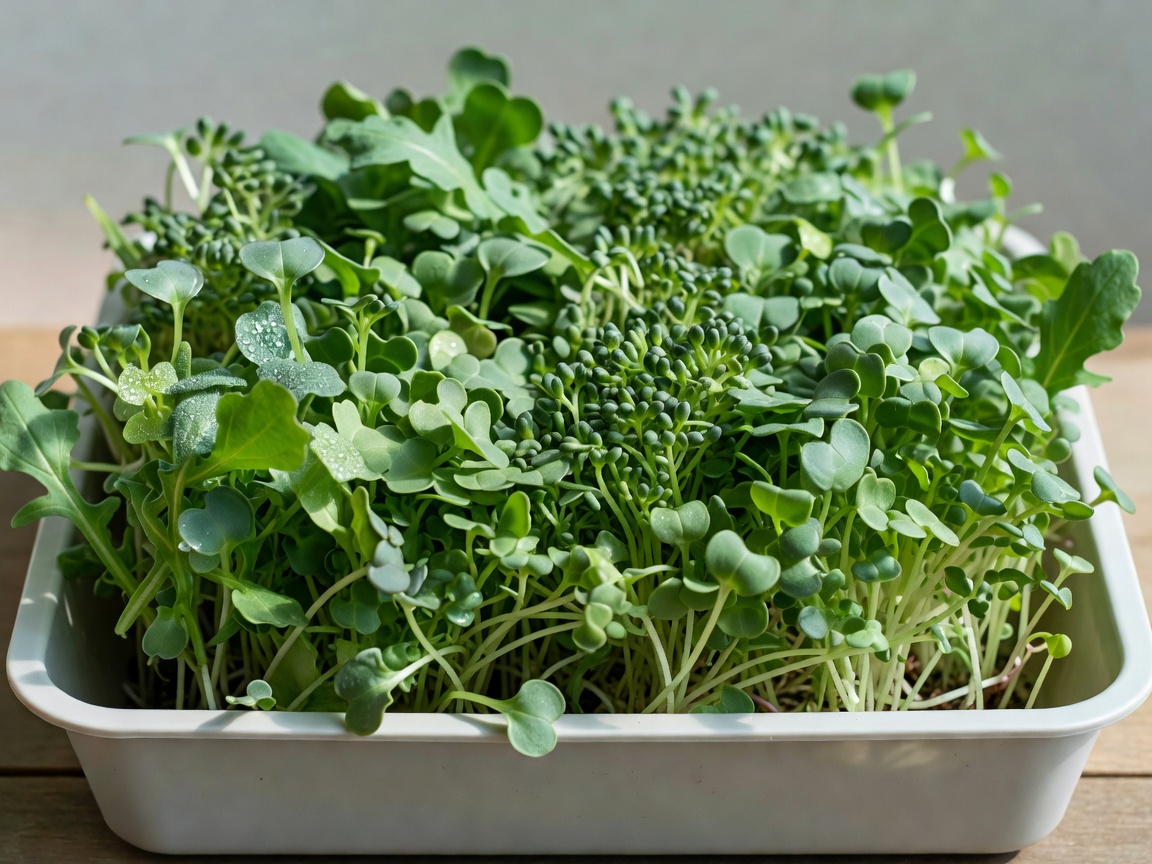
Growing Nutrient-Dense Microgreens at Home
If space is at an absolute premium and patience is not your strong suit, microgreens are the ultimate urban crop. Microgreens are the young seedlings of edible vegetables and herbs, harvested just after their first true leaves emerge. They require mere inches of space, grow indoors year-round, and go from seed to plate in 7 to 21 days.
Why Grow Microgreens?
Beyond their rapid turnaround time, microgreens are prized for their intense flavor profiles and nutritional density. Various agricultural studies indicate that these young seedlings contain up to 40 times higher concentrations of vital nutrients—such as Vitamin C, E, and beta-carotene—than their mature, fully grown counterparts. A small handful of broccoli microgreens can pack the nutritional punch of a whole head of mature broccoli.
The Basic Setup
The equipment required is minimal and inexpensive. You do not need deep pots or heavy soil.
- Shallow Trays: Standard 10x20-inch propagation trays are the industry standard. You will need two trays for each crop: one with drainage holes for the plants to grow in, and a solid tray to sit underneath it for bottom watering.
- Growing Medium: Because the plants are harvested so young, they rely entirely on the energy stored within the seed itself, rather than drawing nutrients from the soil. Therefore, a sterile, soil-less medium is best. Fine coconut coir, hemp mats, or specialized seed-starting mixes are ideal. Avoid standard potting soil, which often contains large chunks of bark that inhibit delicate root growth.
- Light Source: While a very sunny south-facing windowsill can work, a basic, inexpensive LED shop light or grow light suspended just a few inches above the tray guarantees dense, uniform growth without stretching.
Seed Selection and Sowing
Microgreen seeds are sown incredibly densely—much thicker than standard garden spacing. You are essentially creating a thick carpet of seeds. For beginners, the most reliable and fastest-growing varieties include:
| Seed Variety | Flavor Profile | Days to Harvest |
|---|---|---|
| Radish | Spicy, peppery | 7-10 days |
| Pea Shoots | Sweet, crisp, fresh pea flavor | 10-14 days |
| Sunflower | Nutty, crunchy texture | 10-14 days |
| Broccoli | Mild, earthy | 8-12 days |
The Blackout Period and Watering Technique
After sowing the seeds densely on moistened medium, you do not put them under lights immediately. Instead, you enter the "blackout period." Cover the seeded tray with another empty solid tray and place a small weight (like a book) on top. This darkness and pressure simulate being buried deep underground. The seeds will germinate uniformly, driving strong roots down into the medium while pushing aggressively upwards against the weight. After 3 to 4 days, remove the cover and expose the pale yellow seedlings to the light; they will green up within hours.
Proper watering is the key to preventing mold—the bane of microgreen growers. Never water from the top once the seeds have germinated, as wet, dense foliage breeds fungus. Instead, practice "bottom watering." Lift the top tray containing the plants and pour water directly into the solid bottom tray. The growing medium will wick the moisture up through the drainage holes directly to the roots, keeping the stems and leaves perfectly dry.
Harvesting is simple: use sharp scissors to cut the stems just above the soil line when the plants reach two to three inches tall. Wash them gently, spin them dry, and enjoy the freshest possible garnish for salads, sandwiches, and smoothies.