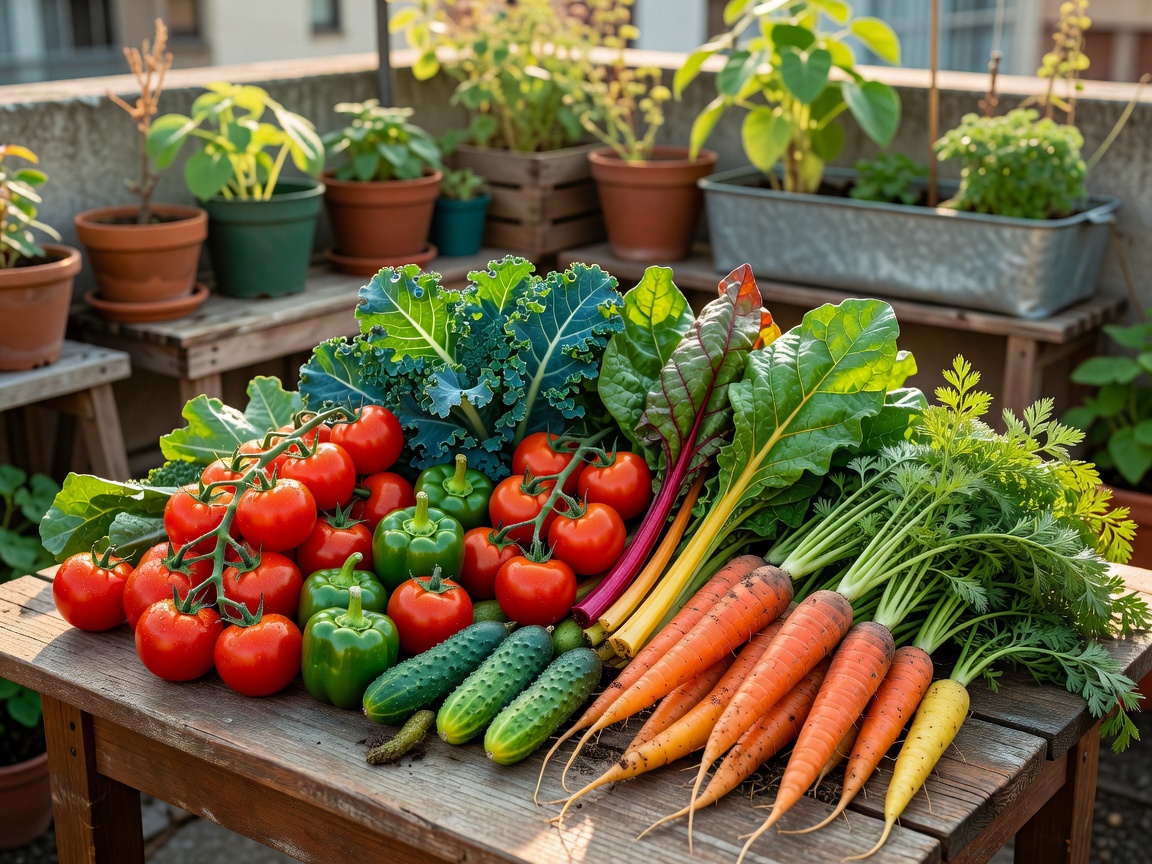
The Complete Urban Food Growing Guide
Urban food growing is a masterclass in spatial efficiency. When your total arable land is measured in square feet rather than acres, conventional row-cropping methodologies are useless. Instead, urban agriculture relies on intensive planting, vertical integration, and aggressive soil management to produce a high-yield harvest in a constrained footprint.
Maximizing Vertical Space
The most common mistake novice urban gardeners make is thinking purely in terms of floor space. To generate a meaningful harvest, you must grow up. Vining crops like pole beans, indeterminate tomatoes, climbing peas, and cucumbers naturally want to climb. Provide them with sturdy trellises, nylon netting, or bamboo teepees.
Vertical gardening not only increases your yield per square foot but also improves air circulation around the foliage, significantly reducing the risk of fungal diseases like powdery mildew. Furthermore, elevating foliage keeps the fruit off damp soil, preventing rot and making harvesting considerably easier on the back.
Intensive Planting and Companion Sowing
Instead of spacing plants widely, urban gardeners use a technique called intensive spacing. By planting crops closely together in a grid rather than in rows, you create a living mulch. The dense foliage shades the soil, reducing water evaporation and suppressing weed germination.
Pair this with companion planting. Certain plants thrive when situated next to each other. For example, planting marigolds near tomatoes deters nematodes, while basil planted near peppers can improve their flavor and deter aphids. Conversely, avoid planting fennel near most other vegetables, as it can inhibit their growth.
Seasonal Planning and Succession Sowing
A single harvest is inefficient for small spaces. To keep your containers productive from spring through late autumn, you must practice succession sowing. This involves planting a new crop immediately after an early crop has been harvested, or planting seeds in two-week intervals to ensure a continuous, staggered harvest rather than an overwhelming glut of produce all at once.
| Season | Ideal Urban Crops | Growth Characteristic |
|---|---|---|
| Early Spring | Radishes, Spinach, Peas | Fast-growing, frost-tolerant |
| Summer | Peppers, Tomatoes, Basil | Heat-loving, requires full sun |
| Late Summer / Fall | Kale, Carrots, Bush Beans | Benefits from cooling temperatures |
The Pollination Challenge
If you are growing fruiting crops on a high balcony or in a screened-in patio, you may encounter a severe lack of pollinators. Bees and butterflies rarely travel above the third or fourth floor of an apartment block. Without pollination, tomato and pepper flowers will simply dry up and drop off the vine, resulting in zero fruit.
To combat this, urban gardeners must become the pollinators. For crops with "perfect" flowers (containing both male and female parts, like tomatoes and peppers), simply vibrating the plant stem or touching the back of an electric toothbrush to the flower truss will dislodge the pollen and facilitate fertilization. For crops with distinct male and female flowers (like zucchini and cucumbers), you will need to use a small, soft paintbrush to manually transfer pollen from the male stamen to the female pistil.
Soil Fertility in Closed Systems
Because container plants cannot send roots deep into the earth to forage for nutrients, they rely entirely on what you provide. Intensive cropping rapidly depletes potting soil. You must continuously replenish fertility. Incorporate slow-release organic granular fertilizers at the beginning of the season, and supplement with liquid feeds—such as fish emulsion or seaweed extract—every two weeks during the peak fruiting phase.
By treating your balcony or patio as a highly managed, three-dimensional ecosystem, you can transcend the limitations of urban living and enjoy a continuous supply of homegrown food.